Flame-Resistant vs. Waterproof Work Jackets for Autumn 2025: Which Offers Better Protection on Rainy Job Sites?
When autumn brings fluctuating temperatures and increased rainfall, choosing the right workwear becomes crucial for professionals exposed to outdoor hazards. Workers operating in wet and hazardous environments must consider whether flame-resistant jackets or waterproof work jackets offer better all-around protection. This article explores the benefits of each type of jacket for rainy autumn job sites. We also link to top-rated products from the Optimum BHP store, helping you stay informed and compliant. For additional insights, visit our blog and FAQ section for autumn and winter workwear guidance.
Expand your knowledge with our other posts:
Affordable Winter Work Jackets for 2025: Best Budget-Friendly Options for EU Outdoor Workers
Introduction: Smart Autumn Layering with Thermal and Hi-Vis Workwear
Best Insulated High-Visibility Work Trousers for Winter 2025: Certified Warmth and Safety on the Job
Best Urgent Thermal Gloves for Winter 2025: Affordable Hand Protection for Cold-Weather Work
Cold Storage Protection: Best Insulated Workwear for Freezer Warehouses in Europe 2025 Edition
Insulated Work Boots for Winter 2025: How to Choose the Best S3 Safety Footwear for Cold EU Conditions
Safety Priorities: When Fire Resistance Comes First
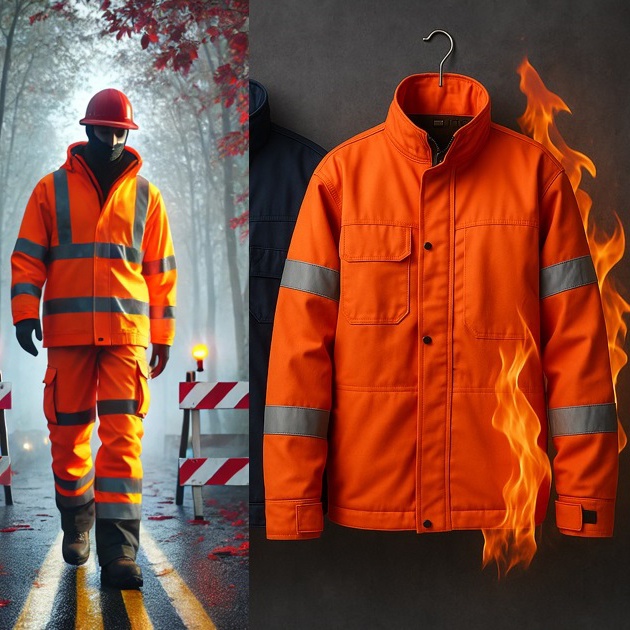
Flame-resistant jackets are vital for workers exposed to sparks, flames, welding, or flammable materials. Jobs in refineries, electrical utilities, and maintenance tasks involving cutting tools or chemicals require certified flame-resistant clothing. A good example is the Portwest Bizflame Rain Jacket S780, which combines fire protection with water resistance. This type of jacket adheres to EN ISO 11612 and EN 1149 standards, offering both arc flash protection and anti-static properties. In environments where fire risks outweigh weather concerns, flame-resistant jackets are indispensable.
Waterproof Jackets: The Shield Against Rain and Cold
For professions like construction, logistics, and municipal services, waterproof jackets are often the first line of defense against weather. Designed with sealed seams, storm flaps, and breathable membranes, these jackets help keep workers dry during long hours of outdoor exposure. For example, the Portwest S466 High-Visibility Waterproof Jacket offers Class 3 visibility and waterproof protection under EN 343. If fire hazards are minimal, a waterproof high-visibility work jacket might be the more comfortable and practical solution.
Combo Jackets: Bridging Fire Protection and Weatherproofing
Modern innovations in PPE now allow jackets to offer dual protection against fire and water. A great example is the Portwest DX466 4-in-1 Jacket, which is waterproof, insulated, flame-resistant, and visible under EN 20471. These multipurpose jackets are ideal for autumn, where wet weather and fire hazards may alternate throughout the week. For companies aiming to simplify uniform management while maintaining safety, investing in multi-standard jackets offers long-term value and worker satisfaction.
Comfort and Breathability: A Crucial Consideration
In addition to safety, comfort is key during unpredictable autumn days. Flame-resistant jackets, such as those by Snickers Workwear, are now engineered with advanced fibers that allow for both heat resistance and flexibility. The Snickers 1130 Reflective Winter Jacket uses 37.5® technology to regulate body temperature while keeping moisture out. Meanwhile, waterproof jackets often use mesh linings or ventilation zippers to allow breathability. Choose jackets with adjustable cuffs, ergonomic cuts, and insulated linings for optimal autumn comfort.
Regulatory Compliance and Certification Requirements
Whether you opt for flame-resistant or waterproof jackets, always ensure the garments comply with relevant EU safety regulations. Jackets like the Portwest PW364 Hi-Vis Winter Jacket meet standards such as EN 343 (waterproofness), EN 20471 (visibility), and EN ISO 11612 (flame resistance). For industries under strict regulatory oversight—such as rail, energy, and road services—selecting the right certified clothing can mean the difference between compliance and costly violations.
Which Jacket Type is Right for Your Team?
Ultimately, your choice depends on job-specific hazards and climate exposure. Flame-resistant jackets are non-negotiable for high-heat tasks, while waterproof jackets are essential for outdoor work in the rain. If both concerns apply, look for dual-certified jackets to cover all bases. Equip your team with gear tailored to their tasks by exploring the full range of insulated workwear and autumn-ready PPE available from Optimum BHP. For personalized advice and product highlights, our blog and FAQ are updated regularly.
Versatile Layering Options with Protective Jackets
For many professionals, layering a flame-resistant base with a waterproof outer shell can be a strategic choice during transitional seasons. This approach enables workers to adapt quickly to changing weather while remaining compliant with safety protocols. Optimum BHP offers a range of thermal workwear that complements both jacket types, providing flexibility without compromising safety. For instance, lightweight flame-resistant sweatshirts or fleeces from Portwest can be worn under a high-visibility waterproof jacket for enhanced protection. This multi-layer strategy not only improves thermal regulation but also extends the life of outer garments. Especially in industries where downtime due to weather is costly, modular clothing systems are becoming the standard. With the right combinations, workers can meet EN ISO 20471, EN 343, and EN 11612 in one outfit.
⸻
Budget Considerations: Cost vs. Long-Term Value
While flame-resistant jackets typically come at a higher upfront cost, they offer extended durability and meet strict safety requirements that can prevent costly workplace incidents. On the other hand, waterproof jackets, such as the CXS Luton 2-in-1, provide great value for teams working primarily in wet environments without fire hazards. Employers must weigh these cost factors against the nature of the work. Investing in jackets that meet multiple standards—such as Portwest S766 5-in-1—can reduce replacement cycles and improve safety ratings across departments. Optimum BHP offers tiered options to meet various budgets while ensuring legal compliance and worker satisfaction. Choosing premium gear may require a higher investment, but it often pays off through fewer incidents and lower turnover rates.
⸻
Industry Use Cases: Matching Jackets to the Job
Different job sectors have distinct requirements when it comes to workwear. Utility workers and electricians often prioritize flame-resistant jackets, whereas construction and logistics teams need waterproofing and high-visibility. The Art.Mas Eclipse Oxford Jacket is ideal for urban municipal services operating in poor weather and low-light conditions. Meanwhile, railway maintenance crews may require jackets like the Snickers 8134 Hi-Vis Quilted Jacket, which balance warmth, waterproofing, and visibility. Matching garments to specific work environments ensures compliance with EN standards and maximizes productivity. The Optimum BHP store offers filters to search by certification, weather resistance, or job type. This helps employers build tailored PPE sets that reduce risk and meet insurance standards.
⸻
The Role of Certification Labels in Decision-Making
Labels such as EN ISO 11612, EN 343, and EN 20471 aren’t just bureaucratic—they directly impact worker safety and insurance compliance. Before purchasing, professionals should understand which combinations of labels apply to their roles. For instance, a jacket like the Portwest PW364 offers certified protection against both rain and low-light conditions. Meanwhile, jackets from Sara Workwear, like the Alpha Winter HV, combine comfort, warmth, and visibility without added bulk. Choosing certified gear minimizes liability and supports a culture of safety. Workers also gain confidence knowing their clothing is tested against real-world hazards. For a full breakdown of certifications, Optimum BHP’s FAQ section is a valuable resource.
Recommendations for Energy and Utility Workers
Professionals in the energy sector—including electricians, linemen, and maintenance crews—must prioritize flame resistance above all. Garments like the Portwest Bizflame Rain Jacket S783 (jeśli dostępny) or certified alternatives from Portwest and Sara Workwear offer both waterproofing and flame resistance. Such dual-function jackets are vital when working in unpredictable weather around high-voltage equipment. Additionally, thermal insulation helps prevent cold-induced dexterity loss, which can be critical during precision tasks. Layering with certified flame-resistant sweatshirts or thermal base layers allows workers to adjust to their environment. The investment in properly layered, certified garments reduces the risk of burns and regulatory fines. Employers should ensure all outer layers meet both EN 343 and EN 11612 to satisfy utility-specific safety audits.
⸻
Recommendations for Logistics and Construction Teams
For outdoor logistics workers, machine operators, and those in construction, waterproofing and visibility are often more critical than flame resistance. Models like the Portwest S466 and CXS London 5w1 offer excellent modularity and coverage in varying conditions. These jackets combine EN 343-certified waterproofing with high-visibility elements compliant with EN ISO 20471. For seasonal work, the ability to detach liners or convert garments to vests or lighter shells is a distinct advantage. Snickers Workwear, known for ergonomic designs and advanced insulation like in the Snickers 1130 AllroundWork Jacket, is another reliable choice. Workers benefit from unrestricted movement, reinforced seams, and breathable waterproof membranes. The Optimum BHP store allows you to filter jackets by season, visibility class, and waterproof rating for easy selection.
⸻
Recommendations for Public Services and Railway Personnel
Public sector workers such as traffic controllers, waste collection crews, and railway staff often need hybrid solutions: waterproof, highly visible, and warm. Jackets like the Portwest DX466 4-in-1 or the S766 Essential 5-in-1 are ideal for these roles. These models adapt to different temperatures while maintaining waterproof and windproof protection. Enhanced reflectivity and compliance with EN 20471 Class 2 or 3 make them suitable for night and roadside work. Railway and airport staff should also consider jackets with elongated backs, such as the Reis Milling Jacket, which improve coverage when bending or lifting. Combining these jackets with high-visibility thermal vests and trousers ensures full-body compliance. Public employers benefit from buying certified sets in bulk directly through the Optimum BHP platform.
⸻
Summary: Flame-Resistant vs. Waterproof Work Jackets for Autumn 2025: Which Offers Better Protection on Rainy Job Sites?
Choosing between flame-resistant and waterproof work jackets for autumn 2025 is not about finding the “better” option—it’s about selecting the right tool for the job. Each type offers unique advantages: flame-resistant jackets protect against serious injury in high-risk sectors, while waterproof high-visibility models excel in logistics and public services. The good news is that the modern market, including the Optimum BHP store, offers hybrid solutions that blend these protections without sacrificing comfort. By understanding your industry’s needs, local weather patterns, and applicable safety standards (such as EN 343, EN 20471, EN 11612), you can make informed purchasing decisions. Employers should also consider worker feedback and prioritize modular garments that adapt to fluctuating conditions. For additional guidance, visit the blog or FAQ section to explore detailed product comparisons and safety compliance tips.
