
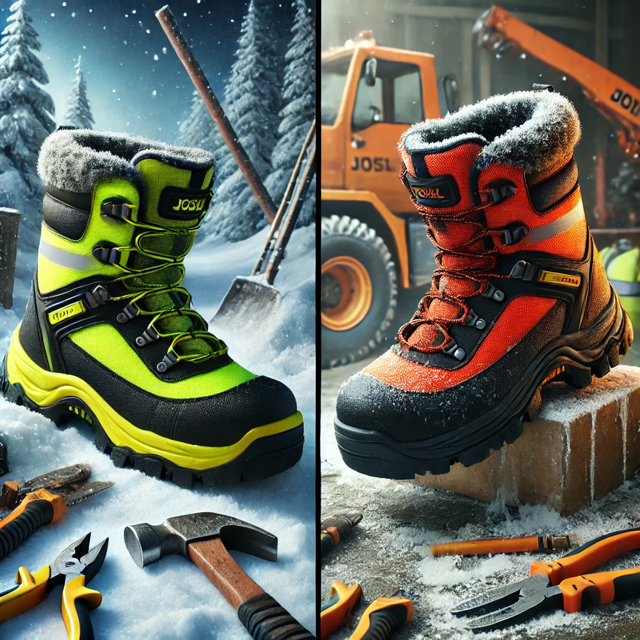
Thermal and Waterproof Composite Safety Footwear for Subzero Outdoor Work in 2025
When temperatures drop below zero, the right footwear can mean the difference between comfort and risk. That’s why thermal and waterproof composite safety footwear has become essential for professionals working outdoors across Europe. At Optimum BHP, you’ll find innovative models from Portwest, Procera, and Delta Plus designed specifically for freezing environments. These boots combine thermal insulation, full waterproofing, and non-metallic composite protection to deliver unbeatable performance on icy construction sites, in logistics yards, and during road maintenance operations. Lightweight, durable, and flexible, they ensure optimal protection and comfort even in temperatures as low as –20°C — a true breakthrough in modern PPE technology.
Find more insights on our blog:
Softshell Work Jackets with Reflective Features: Lightweight Protection and High Visibility for EU Professionals in 2025
Midweight vs. Heavyweight Insulated Workwear for Winter 2025: Which Offers Better Balance of Warmth and Mobility?
Rainproof Softshell Work Jackets for EU Professionals: Top Lightweight Picks for Autumn 2025
Flame-Retardant Winter Workwear by Sara Workwear: Dual Protection for Cold and Hazardous Environments
Cheap Insulated Gloves for Winter 2025 – Procera Delivers Warmth on a Budget
The Best Insulated Bib Pants from Sara Workwear for Cold Weather Jobs
⸻
Why Composite Technology Dominates Cold-Weather PPE
Traditional steel-toe boots are strong, but they transfer cold and quickly become uncomfortable in freezing environments. Composite materials like fiberglass and carbon fiber used in composite safety footwear eliminate that issue entirely. Base Protection and Uvex have developed lightweight composite caps and puncture-resistant midsoles that match steel in strength while being 25–30% lighter. Procera integrates flexible Kevlar plates to shield against nails and sharp debris, while Delta Plus focuses on impact resistance and thermal insulation synergy. Because composite materials don’t conduct heat or electricity, they keep feet warmer and safer — perfect for electricians, construction workers, and maintenance crews facing subzero job sites.
⸻
Advanced Thermal Insulation Systems for Subzero Protection
Effective insulation must retain heat without trapping moisture. Portwest uses Thinsulate™ fibers that provide high thermal efficiency at minimal weight, maintaining a consistent internal temperature even during heavy movement. Procera enhances warmth with fleece and multilayer liners that resist compression over time, ensuring lasting comfort. Delta Plus introduces reflective aluminum inserts that redirect body heat inward while preventing cold transfer from the ground. These innovations guarantee maximum warmth during long outdoor shifts, keeping workers focused and protected without sacrificing breathability or mobility — a must-have combination for real-world subzero performance.
⸻
Waterproof Construction for Extreme Winter Environments
Subzero conditions mean more than cold — they bring slush, ice, and constant exposure to moisture. That’s why waterproof engineering is vital. Procera utilizes sealed seams, hydrophobic leather, and moisture-blocking membranes that create a durable barrier against water. Delta Plus combines dual-density rubber soles with waterproof linings tested under extreme hydrostatic pressure. Portwest models go further with storm cuffs and gusseted tongues that prevent snow from entering the boots. Even after hours of standing in melting ice or wet concrete, feet stay dry, insulated, and stable. Waterproof composite footwear ensures full protection from the environment — the foundation of dependable winter PPE.
⸻
Comfort, Ergonomics, and Anti-Fatigue Engineering
Long outdoor shifts in freezing conditions demand footwear that reduces strain and maximizes comfort. Uvex and Base Protection lead ergonomic innovation by designing energy-return midsoles that absorb shock and recycle walking energy into forward motion. Portwest features memory foam insoles that adapt to the wearer’s foot shape, while Procera adds flexible ankle zones that improve balance and reduce fatigue. Breathable linings manage perspiration, while padded collars prevent chafing during long shifts. The result is footwear that not only protects but actively supports the worker — keeping energy levels steady even during 10-hour winter workdays.
⸻
Durability, Sustainability, and Next-Generation Design
The future of PPE lies in combining performance with environmental responsibility. Cofra and Lemaitre produce eco-friendly composite safety boots using recycled insulation, biodegradable soles, and solvent-free adhesives. Base Protection and Delta Plus apply green manufacturing techniques that reduce CO₂ emissions while maintaining full compliance with EN ISO 20345 S3 standards. Every product available at Optimum BHP is selected for durability, energy efficiency, and sustainability — proving that high performance can coexist with environmental awareness. For companies investing in safer and greener operations, thermal composite footwear represents the pinnacle of 2025 PPE innovation.
⸻
FAQ – Thermal and Waterproof Composite Safety Footwear
1. Why is composite safety footwear better for subzero temperatures?
Composite materials do not conduct cold like steel, helping to maintain internal warmth while still offering full protection against impacts and punctures.
2. Which brands offer the best thermal waterproof composite boots?
Top-rated models come from Portwest, Procera, and Delta Plus — trusted leaders in European winter PPE.
3. How do these boots stay waterproof in extreme conditions?
They feature hydrophobic leather, sealed seams, and waterproof membranes tested to prevent water ingress even after hours of contact with snow or slush.
4. Are thermal composite boots lightweight?
Yes — fiberglass and Kevlar materials reduce weight by up to 30% compared to steel-toe models while maintaining equal strength.
5. Do waterproof boots remain breathable during long use?
Absolutely — advanced membranes allow moisture vapor to escape while blocking external water, keeping feet dry and comfortable.
6. Can I wear these boots indoors as well as outdoors?
Yes, their breathable insulation and lightweight structure make them suitable for cold storage, warehouses, and indoor construction work.
7. Are they certified for safety standards?
All models at Optimum BHP meet EN ISO 20345 S3 standards for impact, puncture, and slip resistance.
8. Do composite boots provide protection against electrical hazards?
Yes — being non-metallic, they are non-conductive and ideal for electricians or maintenance professionals.
9. Are these boots resistant to oil and chemicals?
Yes — Delta Plus models include oil-resistant outsoles and chemical-repellent coatings to handle industrial environments.
10. How do thermal linings work in these boots?
They trap body heat through multi-layer insulation while maintaining ventilation, ensuring consistent warmth without sweating.
11. Can these boots be worn in heavy snow or icy conditions?
Yes — their SRC-rated soles provide strong traction on slippery, frozen, or uneven terrain.
12. Do waterproof composite boots require special care?
They should be cleaned with mild soap, air-dried at room temperature, and regularly reproofed with waterproof spray to maintain durability.
13. How long do thermal composite boots last?
With proper care, they typically last 24–36 months, even under daily outdoor exposure.
14. Are eco-friendly models available?
Yes — Cofra and Base Protection offer sustainable designs made from recycled and biodegradable materials.
15. Where can I purchase thermal and waterproof composite footwear in 2025?
At Optimum BHP — the leading EU supplier of high-quality, insulated, and waterproof PPE for professional outdoor workers.